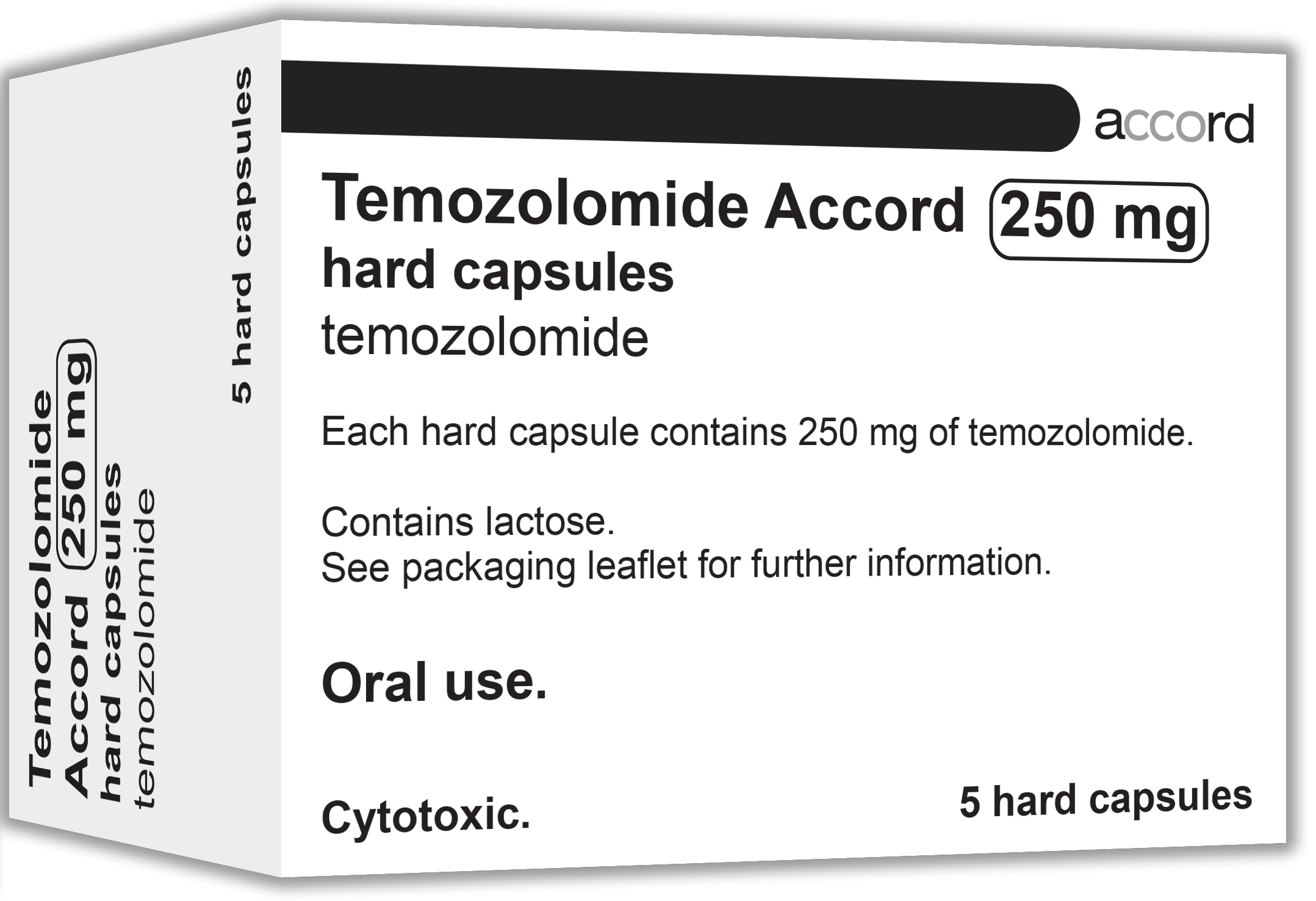
Composition: Temozolomide 250mg
Indication: Temozolomide is an anti-cancer medicine used to treat specific forms of brain tumors: Adults with newly diagnosed specific form of brain tumor (glioblastoma multiforme). Temozolomide is first used together with radiotherapy (concomitant phase of treatment) and after that alone (monotherapy phase of treatment). Children 3 years and older and adult patients with specific forms of brain tumor (e.g. glioblastoma multiforme or anaplastic. astrocytoma) that has returned or where the cancer has spread after standard therapy.
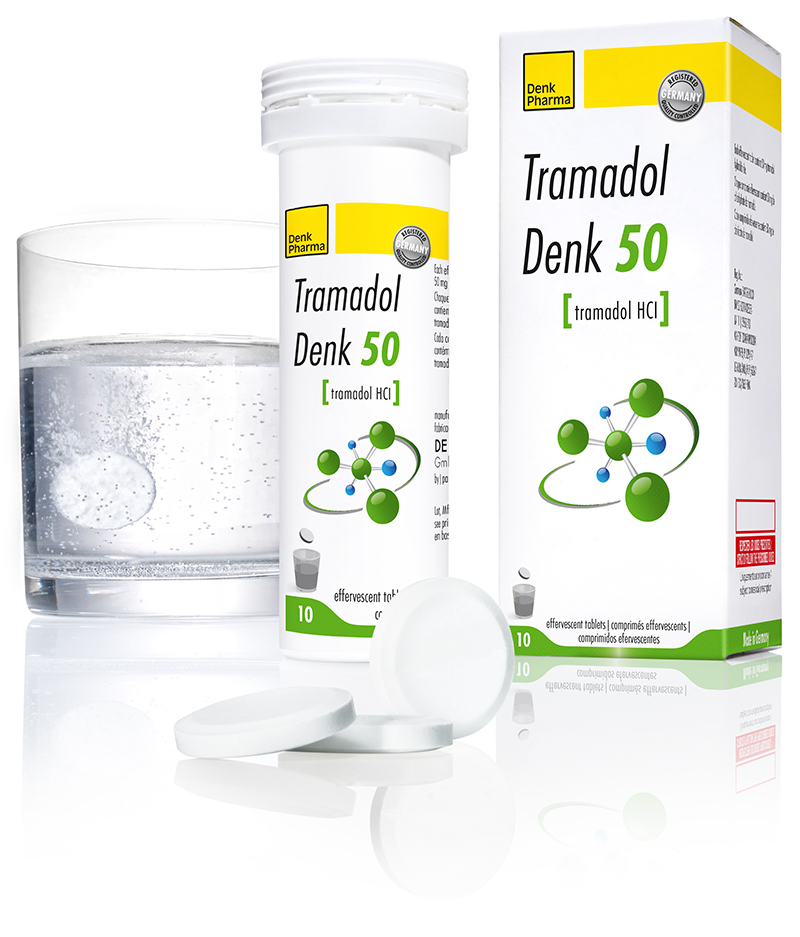
Composition: Tramadol hydrochloride 50mg
Indication: Centrally acting analgesic (pain killer) belonging to the opioid group. it achieves its pain relieving effect by acting on specific nerve cells of the spinal cord and brain. Used for the treatment of moderate to severe pain.
Composition: Zoledronic acid 4mg/5ml Indication: It is used to prevent bone complications, e.g. fractures, in adult patients with bone metastases (spread of cancer from the primary cancer site to the bone). Used to reduce the amount of calcium in the blood in adult patients where it is too high due to the presence of a tumor. Tumors can accelerate normal bone change in such a way that the release of calcium from bone is increased. This condition is known as tumor-induced hypercalcemia (TIH). Used to treat post-menopausal women and men with osteoporosis or osteoporosis caused by treatment with steroids. Used to treat Paget’s disease of the bone.
Composition: Zoledronic Acid 4mg/5ml
Indication: Zoledronic Acid belongs to a group of substances called bisphosphonates. It works by attaching itself to the bone and slowing down the rate of bone change. It is used:
- To prevent bone complications, e.g. fractures, in adult patients with bone metastases (spread of cancer from primary site to the bone).
- To reduce the amount of calcium in the blood in adult patients where it is too high due to the presence of a tumour. Tumours can accelerate normal bone change in such a way that the release of calcium from bone is increased. This condition is known as tumour-induced hypercalcaemia (TIH).